On
this page we will be posting reviews of publications received by The Pamphleteer. If you would like your work considered for review, please send a copy to:
The Pamphleteer
Post Office Box 10146
Berkeley, Calif. 94709
From The Pamphleteer of Tuesday, 7 June 2011

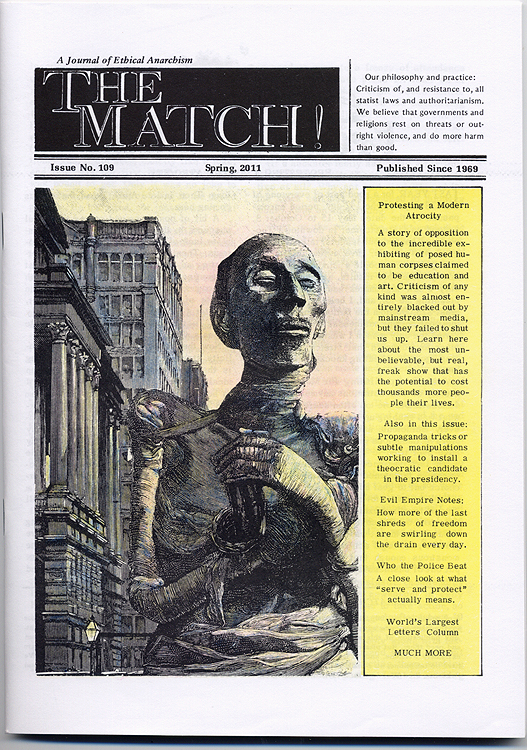
The Match! n.109, by Fred Woodworth. (2011) Fred Woodworth has been the standard-bearer for ethical anarchism for over forty years, publishing his journal, The Match!, since 1969. Now on its 109th edition, the series has remained essentially the same since the beginning. Fred's assertion is that all organizations and bureaucracies that attempt to control individuals should be dismantled, or at least ignored.
I first discovered The Match! over a decade ago in what I would come to realize was a most unconventional way, at least as far as the ethos of the publisher and his publication are concerned. I’d just read a screed against television watching which was circulating via email at the time, and The Match! was named as the source of the article. The rant wasn't inherently interesting, and the email was of the sort which I would have — then as well as now — just as likely have tossed without reading it. At the time, the World Wide Web was just getting into full swing and I had already spent a few years thinking that its use had at least as much potential as a time-wasting activity as did television (in hindsight, not a big stretch of the imagination, but true nonetheless). I was intrigued that there might be support and a forum for discussion of mindless media use, so I did what anyone would do, circa 1999. I wiggled my fingers and flicked my wrists and searched Hotbot.com for an official website for The Match! The search was fruitless, other than to turn up a few instances of the same information I’d read at the bottom of the email, which stated that the publication was available free to anyone who would request it—not online or over the phone—but by request to a post office box in Tucson, Arizona. So I copied down the address and, a day or two later, sent a letter to Fred Woodworth introducing myself and asking for a copy of his magazine.
An envelope arrived about a week later from Fred, filled with a few back issues and the current volume of The Match! They were beautiful. Fred had chosen for the cover art historical woodcuts and engravings I was familiar with from my own bibliophilic collecting, but he had printed them in color in ways I was unused to seeing. A lantern might glow with a yellow ink which crossed the lines of the engraving, for example, or an antique allegorical cut might be colored in several pastel shades. I had been used to zines printed at letter size (8½ x 11 inches) or half-letter, but Fred’s zines were different, measuring 6¾ by 9½ inches and printed on paper slightly thinner than that which I had used for zines made with computers and photocopiers. There turned out to be a very good reason for this. Fred used neither computers nor photocopiers for his production. His paper was a standard size, but one for offset and letterpress printing. This was in keeping with an aspect of Woodworth’s philosophy, which came through in each article in The Match!, a philosophy that just because some-thing new comes along doesn't mean one should take up its use. It’s a simple idea, but revolutionary in that we don’t instinctively think it.
I subscribed immediately, sending Fred not a check but a letter and some folded bills, a process I was used to from several years of zine publishing and trading. Again, Fred responded right away with another back issue or two and, a few months later, with the next issue of The Match!.
What I discovered in reading through my small collection was that The Match! had been putting forth the same message year after year, decade after decade. Even an early issue I received, printed in 1972 and in tabloid newspaper form, was almost indistinguishable, content-wise, from the latest. This has carried on so much so in the years since my first discovering Woodworth’s work that the rest of this review will be a paraphrase from one I wrote for The Match! around 2003.
Since its inception in 1969, The Match! has consistently questioned authoritarian government, religion, and society and their homogenizing effects. Computers, the Church (Christian and otherwise), the police, the U.S. Census, jury duty, and the bookselling industry are just a few of the institutions regularly disparaged in its pages. Woodworth calls The Match! “a journal of ethical anarchism,” a philosophy and way of life which denies any outside authority superiority over the individual. In practice it is strictly non-violent, countering the popular image of the anarchist as a brick-throwing vandal.
Fred is a collector of offset and letterpress printing equipment which he puts to regular use, publishing each issue without computers or photocopiers. Recent numbers have also been produced on machines using electricity he generates with a solar-energy setup. The Match! features the world’s largest letters column, often running more than twenty pages. Now in its 42nd year, the journal recently added a “Forty Years Ago in The Match!” column which, more than anything else, reminds readers that civilization has been going down the tubes for quite some time.
In form and content, The Match! has inspired any number of anarchist or free-thinking periodicals, including the now long-lost Violet Jones publications Spunk and The Free Press Death Ship and, more recently, Anthony Leskov’s Communicating Vessels. Fred reviews many such publications in his journal, so whether or not his particular take on living free from outside authority is parallel to your own, The Match! is an invaluable resource for pointing you toward sympathetic people and publications. This direction is especially helpful for readers looking for voices which align with Fred’s but aren’t as acerbic — I’m sure he would have another word to define his tone, “realistic,” perhaps — as he long ago gave up hope of effective positive change ever coming to humanity. Aside from the political commentary, Woodworth often delves into detailed and insightful discussions of the finer points of the nearly forgotten technology he continues to care for and use to beautiful effect.
What does change with each issue is the focus of Fred’s ire. In the current edition, n.109, which arrived in mid-March, he devotes the cover and fourteen of the issue’s 80 pages to an article recalling his daily, months-long protest of a popular Tucson exhibit of plastinated Chinese corpses whose exact provenance (and consent in participating in the display) was murky.
Fred also publishes the occasional Mystery & Adventure Series Review for fans of Tom Quest, Hardy Boys, Ken Holt, and similar series. Reading the Review, it is fun to see where these books’ themes and topics relating to ethical anarchism overlap.
8vo offset & letterpress pamphlet, 80pp. The usual (no checks). Source: Publisher. Contact: The Match!, Post Office Box 3012, Tucson, Ariz. 85702.

From The Pamphleteer of Sunday, 25 July 2010
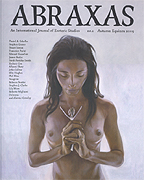
Abraxas n.1, by Robert Ansell and Christina Oakley Harrington (editors). (Fulgur Limited and Treadwell’s, 2009) In days of yore, when men were real men, women were real women, and small furry creatures from Alpha Centauri were, well, yet to visit the luminous mind of Douglas Adams, there was a thriving tradition of so-called “occult journals” or magazines, sold by mail-order or on the shelves of The Atlantis Bookshop, Forbidden Planet, or Watkins. Almost invariably they were shoddy little productions—Gestetnered or photocopied, folded and stapled—containing boastful proclamations and often fanciful accounts of arcane activities that appeared to owe more to student readings of Machen and Lovecraft than any real work. Most of them were single-order publications, house magazines, if you will, of magical groups that probably existed nowhere beyond the four walls of the bedrooms in which the articles were written. And yet… And yet, as a teenager I’d catch the train to London once a month just in the hope that I’d find a new one on the shelves. Because, you see, some of them really were worth the effort and the expense. There was Sothis, of course, a reprint of which is surely long overdue. And Starfire, with its more impressive production values. Chaos International, too, and Aquarian Arrow, which had writing of such good quality that its articles wouldn’t have been out-of-place in any number of mainstream periodicals. Finally, there was the Cincinnati Journal of Ceremonial Magic, with its remarkable design and artwork.
And then along came the Internet and, with it, disaster for this type of production. Suddenly—and it really was quite sudden—you could find what you were looking for in moments. Production quality seemed to become irrelevant, when pretty much everything Crowley ever wrote was available for immediate download and when every wannabe occult master was able to “self-publish.” The journals became websites and the work of days and weeks to produce something of lasting value turned into the often boastful work of minutes on Geocities or Fortune City, where a “web presence” resulted in moments from templated sites of little creativity and less application.
So, the digital world of instant gratification killed the occult journal, stone dead. Only it didn’t; not entirely. Starfire continued its somewhat erratic publishing schedule, standing almost alone on the shelves as something worth buying and, more importantly, worth reading. Self-publishing companies like Lulu.com ensured that individuals and small groups could publish without the inconvenience of laying money down upfront. If you could save a Word document as a PDF file you could become a published author, even if the end result was depressingly formulaic, poorly produced, and destined to remain unread.
And then the postman called and left me a rather splendidly wrapped work of such excellence that it became clear that the very technology that had led to the near-fatal malaise of the occult journal had enabled a publication of extraordinary beauty and remarkable content: Abraxas.
We all knew about the impending arrival of this new occult periodical, of course, as it had been trailed on a number of websites. What made these announcements special, of course, was the two names associated: Robert Ansell from Fulgur and Christina Oakley Harrington from Treadwell’s Bookshop. Fulgur, of course, is the publishing house that has produced works of enormous power and beauty and Treadwell’s Bookshop has become a salon of excellence, promoting lectures by the most prominent specialists working within the genre, a cavalcade of occult excellence.
So, what of Abraxas? Surprisingly little is given away in Robert’s editorial about its objective and raison d’etre, so it becomes that which it appears to be: an occult journal par excellence. Its banner proclaims it to be “An International Journal of Esoteric Studies,” and that’s probably about as much as we need to know for the time being.
The journal is a large format paperback of 128 pages, but that simple description doesn’t begin to do it justice. Its cover is skillfully laminated and it’s solidly bound: there’s certainly no fear of this one falling apart despite repeated readings. It uses a range of paper types and colours, including a substantial portion printed in black on dark grey paper: the fact that this section is not only legible but eminently so is testament to the typographic skills of the “art editor” Robert Ansell, who aside from his editorial also contributes a photographic work. Questions have been asked about a twenty-five-quid price tag for a magazine, but it’s worth every penny with production qualities like this: besides which, I’d be surprised if there are many readers of this review that have lost money on the purchase of anything from Fulgur! Make no mistake, Abraxas is physically the work of a publishing house at the absolute peak of its powers—it’s a magnificent production that owes more to the most up-market artistic and architectural journals for its inspiration than it does to its occult legacy.
Moving slowly past the achingly beautiful cover illustration by Francesco Parisi and, rather more rapidly past the, ahem, “Manifesto,” we arrive at the editorial, which sets the tone, with its friendly welcome, although the mission statement on page 128 is perhaps rather more informative.
And, before we move on to Xoanon publisher Daniel A. Schulke’s “The Green Intercessor” article, it’s time that I make a confession: I’m not all that interested in witchcraft. There, I’ve said it: it’s a matter of record. And this journal—or rather, this issue of this journal—is most assuredly about witchcraft. And yet… And yet, I was fascinated by every single article in this extensive collection of essays and artistry. Schulke’s piece on “plant-magic” will enthrall all those that enjoy the works published by Xoanon: it’s well-informed, erudite, and well-referenced. I enjoyed his account of a subject that I’d normally avoid.
Edward Gauntlett is up next with a fascinating discussion of witchcraft and “the graal” in the woefully overlooked fiction of Arthur Machen.
Now, poetry in occult journals is often best avoided or at least treated as an ordeal or peril on the path. Abraxas, however, has bucked this trend by including “Song for Sleeping Souls,” by the venerable Zachary Cox, and “Babalon” from Aleister Crowley’s Book of Oaths, both of which are captivating and worth reading. I’ll pass over the remaining poetry in this volume.
A beautifully illustrated interview with Francesco Parisi follows. His work, with which I was previously unfamiliar, is astonishing and Robert Ansell’s interview a respectful delight.
Sarah Penicka-Smith’s essay on flying ointments is a substantial contribution to a subject that has been covered extensively in the past but to far less effect. Her piece is impressive and wide-ranging.
Surrealist Stuart Inman’s article on “Gnosis and Epistemology in Traditional Craft” left me somewhat baffled but, given his obvious enthusiasm for his subject, this doubtless says more about me than him. As he writes: “You may chose [sic.] to disagree with what I have written here, after all who am I? On the other hand, can you really dismiss my argument? After all, who are you?” Quite.
The anonymous author of “Liber Niger Legionis” is up next with an intriguing and rather impressive piece of work that rewards multiple re-reads.
Author and lecturer John Callow’s lengthy essay on Dürer is absorbing, as is James Butler’s “On Sappho.” Phil Hine—who will need no introduction to most readers of this—writes amusingly and sympathetically about Lobsang Rampa in what is one of the journal’s most impressive and entertaining articles.
I say, “one of the most impressive” because there’s an article that I’ve yet to mention. I believe it to be an extraordinary article that deserves to be reproduced widely. Stephen Grasso’s “Skip Witches, Hop Toads” is really good stuff: informed, erudite, and unpretentious. Every paragraph sings with an earnest comparison of witchcraft and magic by someone well qualified to write on both. Wonderful!
So, to summarise. Fulgur and Treadwell’s have combined forces to produce a book—sorry, a journal—with magnificent production values and, importantly, with contents that justify the effort. Quite simply, superb; I can’t wait to see future issues.
4to offset perfect-bound, 128 pp. £25. (The £70 hardcover edition with print by Francesco Parisi has sold out.) Source: Publisher. Contact: Fulgur Limited, BCM Fulgur, London, WC1N 3XX, United Kingdom. Online at fulgur.co.uk.
Abraxas review by Paul Feazey, LAShTAL.com

A Field Guide to Identifying Unicorns by Sound, by Craig Conley. (Prof. Oddfellow’s Forgotten Wisdom, 2007) Craig Conley is a true Renaissance man of the modern era, diving headfirst into comprehensive, open-minded study of realms obscured or merely obscure. A voracious researcher, he possesses both the focus required to compile book-length arcana on a given topic and the objectiveness to consider sources other scholars might ignore. It is precisely this tendency to “overlook” that forms the basis for Conley’s Field Guide. As he states in the book’s introduction, “Because we live in a highly visual world, we rarely exercise the full range of our hearing. Yet our ears can detect things that our eyes automatically reject. By listening as opposed to looking, we can avoid overlooking. Practice can be richly rewarding, whether one is listening for unicorns in particular or neglected delights in general.” And so Conley mines the known literature on unicorns, nobly eschewing distinctions between historical accounts, fantasy novels, and instances of metaphor, organizing the brief excerpts and other tidbits found into 51 short lessons in the art of “deep listening” necessary to perceive the fabulous beasts. Soundwave diagrams impart insight into such audible tendencies of the unicorn as rustling, laughter, mimicry of orchestral instruments, soft nickering, cries of ruin, and the creature’s alarm “sneeze.” More complex diagrams contribute to the remapping of the once well-maintained highways between magic and science, illuminating such correspondences as the Fibonacci Spiral with the shape of the outer ear and the comparative curl of the unicorn’s horn with that of the human cochlea. Conley also offers a companion compact disc with four tracks of listening exercises set in a sylvan soundscape. Narrator Michael Warwick guides the listener through the first half of the CD, then departs, leaving only the birdsong and delicate, layered crackle and murmur of the forest and whatever one might discover there. This book and recording are fine works of practical esoterica. Highly recommended. 8vo offset paperback, 148 pp. $16. The compact disc, Field Recordings for Unicorn Listening Practice, is available separately for $16. Source: Publisher. Contact: Craig Conley, 8311 Brier Creek Parkway, Suite 105–353, Raleigh, N.C. 27617. Online at OneLetterWords.com/unicorn.
From The Pamphleteer of Sunday, 17 January 2010
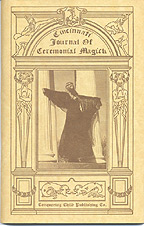
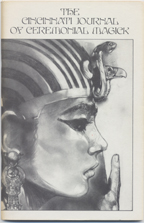
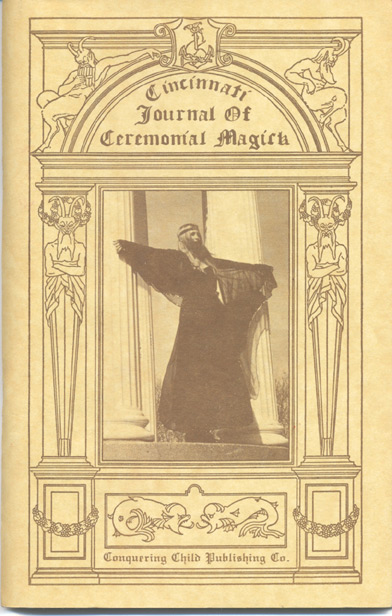
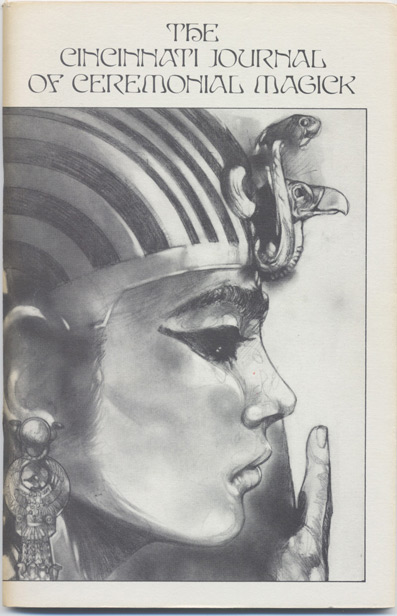
The Cincinnati Journal of Ceremonial Magick v.1, ns. 1–5; v.2, n.6, by ANDAHADNA, L aus F, S.M.Ch.H., Samekh, et al. (The Cincinnati Chapter of the Crowned and Conquering Child/Bate Cabal 1976–1988) I first saw copies of The Cincinnati Journal of Ceremonial Magick on a secondhand books table at this year’s Esoteric Book Conference in Seattle. As I’d already overshot my buying budget for the trip I refrained from picking up any of these compelling pamphlets then, and so was delighted to find these issues stocked at Pegasus about a month later. I believe these vintage copies are from the library of one of the Journal’s editors.
The overall impression the booklets give is one of a small group of seekers trying to define themselves within the larger framework of Thelema (the Crowleyan tradition), but also hoping to establish “a common forum for all magickians, pagans, Wiccans, and other practitioners of the Sacred Art,” as the editors state in the first issue. To this end, there are articles, illustrations, practical notes on ritual magic (sexual and otherwise), poems, publication reviews, and a letters column. The selection of advertisements in the back of each issue offers a glimpse at the state of occult publishing and retail of the era. It was fun to see an ad for what must have been a prior incarnation of the first magic and witchcraft shop I ever visited (in Iowa City), and anyone who knows Adam McLean’s Magnum Opus Hermetic Sourceworks series of extremely limited edition hand-bound books will understand the thrill I got at seeing a notice for the series’ first book—The Magical Calendar—listed for only $30.
The first three issues of The Cincinnati Journal feature enjoyable and instructive photo essays of rituals and “Gestures of the Art,” the latter picturing a pair of practitioners striking the ten magical postures made famous by Crowley in his Magick in Theory and Practice. As The Cincinnati Journal progressed, the publishers included commentary on the editorial compromises necessary to meet the needs of both their own Bate Cabal and those of the growing readership, which grew to include alchemists, Kabbalists, Wiccans, devotees of the Scandinavian faith Ásatrú, and other practitioners. The Journal underwent a six-year hiatus following the publication of v.1, n.5, picking back up in 1988 with the unconventionally numbered v.2, n.6, and with the shorter title of The Cincinnati Journal of Magick. Whether further numbers were published, I don’t know.
Just as the issues from the ’70s reflected the social seeking of that era, by 1988 the Bate Cabal had presumably found the niche they wished to inhabit, stating that the Journal was now focused more on their “present collective interests.” Another telling note of the changing face of “the Sacred Art” in this later issue was a short article on new considerations regarding sex magic in the dawning era of AIDS. Digest offset pamphlet, 92–96 pp. (v.1), 64 pp. (v.2). $5–$7 originally, $8 used. Source: Pegasus, 1855 Solano, Berkeley, Calif. 94707. Contact: Black Moon Publishing, Box 1343, Cincinnati, Ohio 45201.

H.P. Lovecraft’s Terrifying Escape, by Ed Sams. (Yellow Tulip Press, 2004) Ed Sams compellingly over-lays the Kabbalistic Tree of Life atop the stories of early horrorist H.P. Lovecraft, showing how the author may have, in his works of fiction, been documenting his travels to the mystical waypoints of the Tree’s sefirot. Drawing on Lovecraft’s biographies and published collections of letters, as well as various accounts of practical Jewish mysticism from the 19th and 20th centuries, Sams paints a portrait of a writer not so much bound by the poverty and illness that circumscribed his life as he was liberated by the actual existence of the limitless and terrifying realms he described. This is one pamphlet in Yellow Tulip Press’ Curious Chapbooks series, which explores darker aspects of the lives of several famous historical characters, including Harry Houdini and his “Red Magic,” Oscar Wilde’s association with Jack the Ripper, and sinister doings in the court of Queen Victoria. Digest xerography pamphlet, 52 pp. $6.95. Source: Publisher. Contact: Yellow Tulip Press, P.O. Box 211, Ben Lomond, Calif. 95005. Online at CuriousChapbooks.com.
From The Pamphleteer of Monday, 20 July 2009
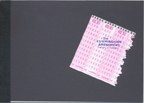

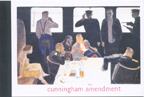
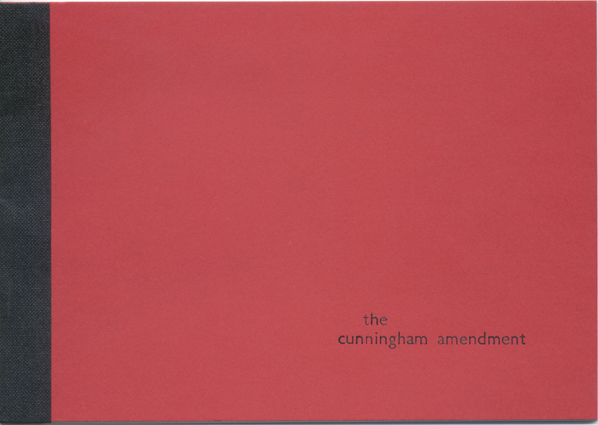
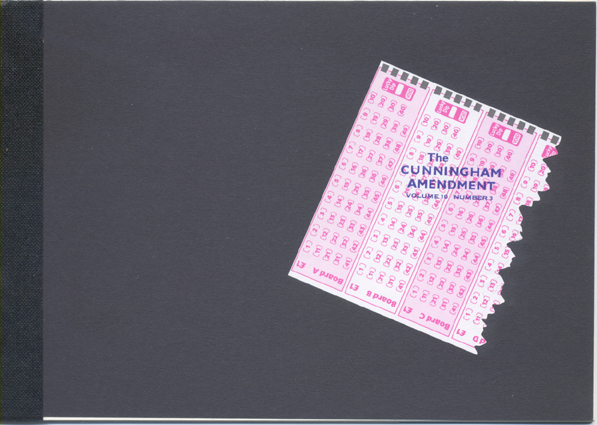
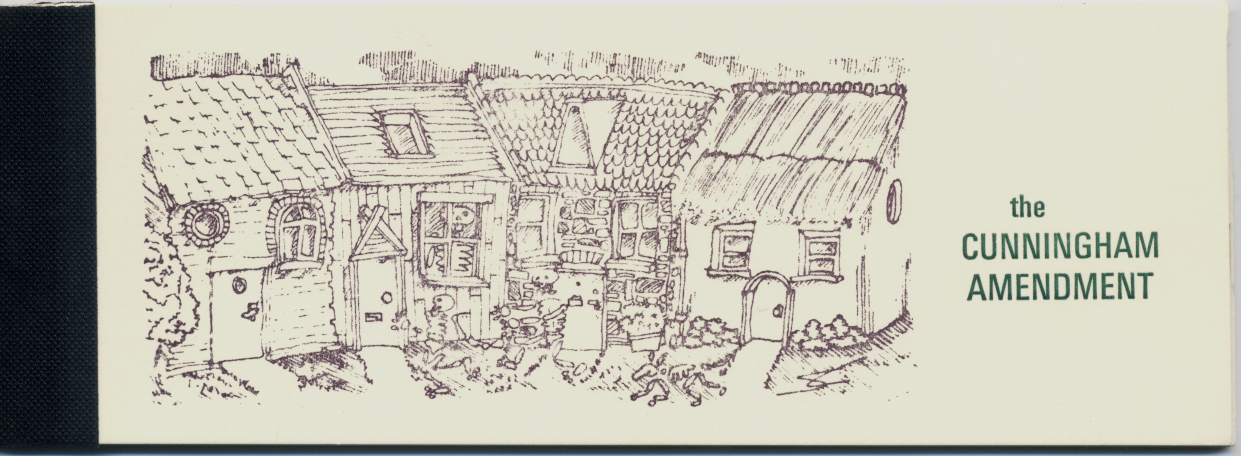
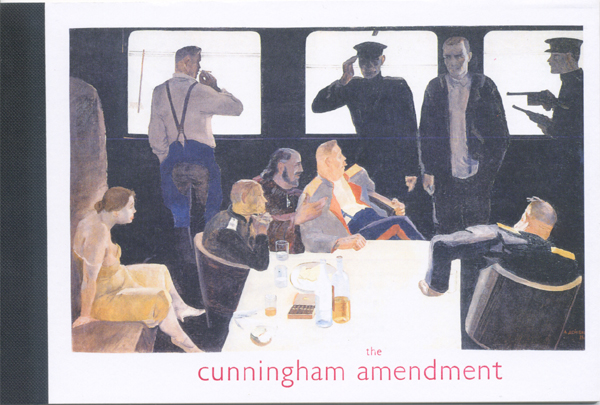
The Cunningham Amendment: Journal of the East Pennine Anarcrisps v.10, ns.2–4; v.11, n.1, by Doreen Frampton, et al. (R. Supward Press, 2008–2009) A5 (n.4 at half-height) color letterpress with tip-ins side-stapled pamphlet, 24–32pp. Send cash, stamps, or equivalent for your copy. 42p for Anarcrisps, £1 for regular anarchists, £2 at book fairs. Open to trades. Source: Publisher. Contact: The TCA, 1005 Hudderfield Road, Bradford BD12 8LP, West Yorkshire, England.
I discovered The Cunningham Amendment about the same time I came across The Village Green Preservation Society, an early album by The Kinks, and I believe I love both for many of the same reasons. They are calling cards from worlds which might at first seem imaginary, but with a bit of squinting and the changing of a few daily habits come into view in no time. What habits those are will be different for each person, but let me say that for those who want to live a freer, more creative, more productive, fun life, the price of admission is well worth the experience.
The TCA is compiled by a jolly cast of characters who are quoted throughout, each with his or her own role or area of specialization—Central Scrutinizer, Spiritual Advisor, Janitorial Services—within East Pennine Anarcrispdom. Defined as “nice anarchists,” Anarcrisps realize that real independence from restrictive dogmas, institutions, hierarchies, and other aspects of “the non-Fool world” is achieved not with bricks through windows and marches in the streets so much as it is with a shift in attention to the inner wellspring of freedom each of us inherently possesses.
Every issue restates The Cunningham Amendment’s subscription policy (put simply: if the reader keeps in touch with the TCA, the TCA will cheerfully return the favor), notices for upcoming book fairs and social evenings, and “The Frampton Obligations,” a short litany of suggestions based on personal responsibility and mutual aid including “More discipline for the poor,” and “All Anarcrisps strive to practice a simple kindliness to Others. Others are respected because the Other is Other.” Inside the back cover, a tipped-in sheet unfolds to present a list of recommended reading. I’ll have what they’re having!
Regular columns in the past four issues chronicled recent comings and goings of Anarcrisps and other people about town and printed dispatches from gab-session “seminars” held at the TCA’s local, the Goat & Compasses. Any Marxists or other ideologues chiming in to these talks are tapped on the shoulder and asked to speak in their own voice, not that of their political party. William Burroughs’ life-improving “Do Easy” method is examined in v.10, n.2, as is Dr. Peter Good’s “As If ” technique: “‘As If ’ describes the struggle of those who look forward to a revolutionary age yet accept an obligation to live in the present as if they were living in the age to come.”
Another shunning of theory in favor of everyday experience was a 215-word story mashing together clichés from potboiler romance and young activist life, resulting in a truly sweet tale of awkward new love: “She looked very beautiful with the red studs in her lip and the navy rouge on her cheeks made her look quite the thing. Jacko heaved a sigh and his eyes flashed as he beheld her and Stell thought to herself what a fine class warrior he looked...”
Some articles and sidebars portioned out in the TCA are extracts from other publications with racy titles such as At Daggers Drawn and Flakes from the First Sea Lord’s Foreskin. The existence of such publications conjures up visions of a world bustling with Anarcrisps who, if we would but look, are there to lend a hand, ask the right question, or simply pass the minted peas and smile.
All these ideas are presented in colorful letterpress type using lots of merry borders and typographical flourishes and dingbats. It strikes me that people are more ready than ever for this sort of manic, compact visual composition, given our growing adaptability to navigate similar (but far less pleasing to the senses) layouts on our computer screens.
What I’ve found most emboldening about the TCA is that for all the fun they’re having, the editors never fail to remind readers that the fight of the Anarcrisps is against the entire range of injustices and denials of humanity, ranging from massacres in far-off lands to the sight of someone sitting on the curb, crying quietly so as not to draw attention.
A confession: During one of my more miserable sojourns in “the non-Fool world,” I took to photocopying some of The Cunningham Amendment’s pithier bon mots, each no bigger than a bookplate, and distributing them surreptitiously around San Francisco, Berkeley, the homes of friends, and wherever else I thought they might do some good. I don’t think the stunt hurt the journal’s quarterly earnings, and I like to think it may have saved more lives than merely my own.
From The Pamphleteer of Wednesday, 22 April 2009

Alice’s Adventures in Jurisprudencia, by Peter F. Sloss, with illustrations by Sally Richardson. (Borogove Press, 1982) Attorney and arts patron Peter Sloss penned this fun and instructional spoof on Lewis Carroll’s phantasmagory Through the Looking Glass, and What Alice Found There. In it, a modern-day Alice, now a young adult, is unwinding after a long day at her lawyer’s office. She drifts off in front of the television and finds herself in Jurisprudencia, a nonsensical world where only pedantic lawyers and judges can interpret reality. Sloss took his inspiration from a quote from California Chief Justice Roger Traynor, who in a 1968 case stated, “If words had absolute and constant referents, it might be possible to discover contractual intention in the words themselves and in the manner in which they were arranged. Words, however, do not have absolute and constant referents.” This struck Sloss as very much akin to Humpty Dumpty’s sentiment in Through the Looking Glass: “‘When I use a word,’ Humpty Dumpty said, ‘it means just what I choose it to mean—neither more nor less.’ ‘The question is,’ said Alice, ‘whether you can make words mean so many different things.’ ‘The question is,’ said Humpty Dumpty, ‘which is to be master—that’s all.’” A cast of strangely familiar characters—Chief Justice Dumpty, the White Knight, Tweedledum and Tweedledee, and the Mad Hatter among them—tolerate Alice’s perfectly reasonable confusion and questions about topics including deeds, wills, and contractual law. Richardson’s whimsical line illustrations combine homage to Tenniel with the trappings of the courtroom. A list of referenced court cases at the back of the book shows how entrenched this fantasy is in fact, and made me both curious to learn more and content not to have any more dealings with the courts than I already do. Dig off perfect, 88pp. $4.95. Source: Publisher. Contact: Borogove Press, c/o Hillary Sloss, 58 Locust Avenue, Mill Valley, Calif. 94941.

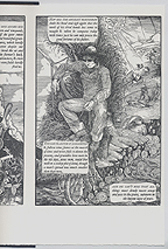
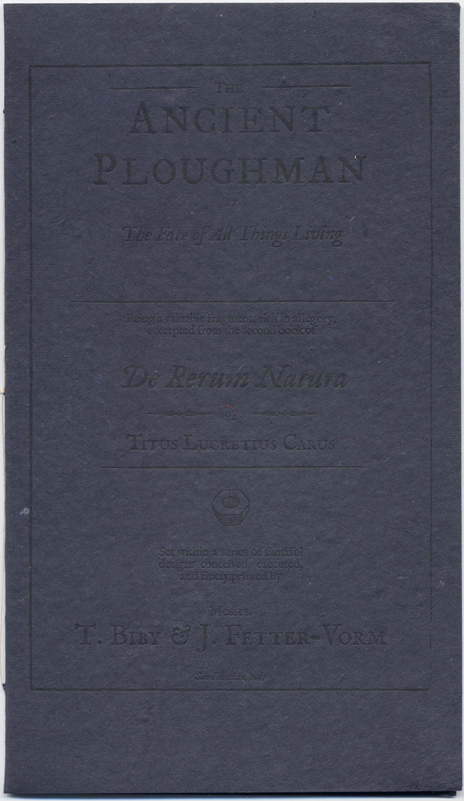
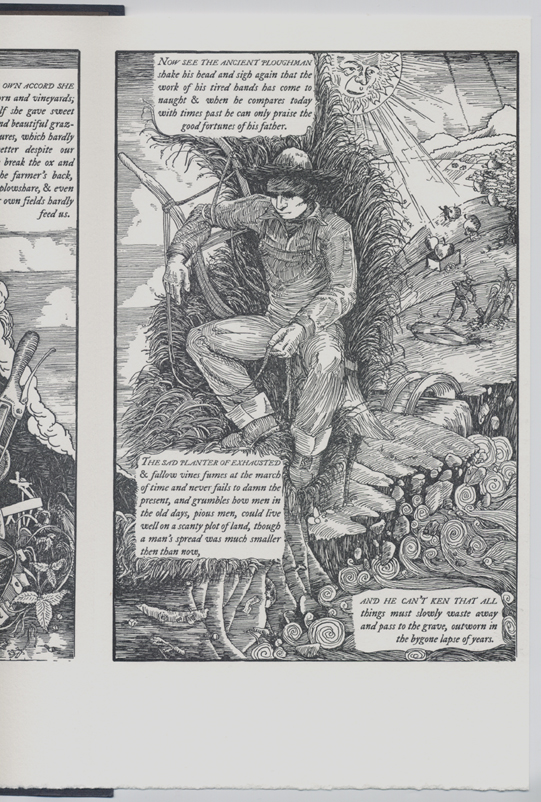
The Ancient Ploughman, or, The Fate of All Things Living, by Titus Lucretius Carus. (Two Fine Chaps, 2007) Taking its text from a passage from the second book of Lucretius’ first-century BCE work De Rerum Natura, this exceedingly handsome pamphlet showcases, in two pastoral landscapes portioned among six panels, the careful and detailed pen-and-ink work of Thomas Biby and Jonathan Fetter-Vorm. Messrs B and F-V are the eponymous Two Fine Chaps who published this timeless rumination on the origins of life, the nature of growth, of decay, of food’s role in it all, and mankind’s inevitable short-sightedness when looking both forward and back. Their drawings echo Renaissance-era interpretations of Lucretius, but include Depression-era American imagery. The booklet was printed at Peter Koch’s press in Berkeley. I picked up my copy (34 in an edition of 200) a few years ago at the Alternative Press Expo in San Francisco, where I was drawn to the quality of its production, its revival of old text and sentiments, and the amiability of the Fine Chap representing himself at the table. Narrow-letter letterpress, 16pp. incl. center fold-out. $25. Source: Publisher. Contact: Two Fine Chaps, 240 Klamath Street, Brisbane, Calif. 94005. Also online at the well-made TwoFineChaps.com.

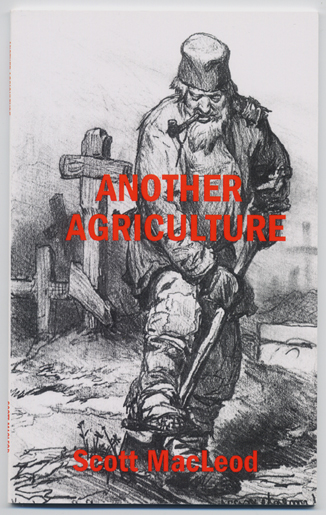
Another Agriculture, by Scott MacLeod. (Serious Projects, 2008) The narrators in Bay Area artist Scott MacLeod’s poems reflect on landscape, disaster, war, and the murkiness of human relationships. In addition to this small volume’s single-page verses, Another Agriculture includes the text from MacLeod and Jim DiStefano’s “Arsondale,” a performance on the theme of a flood catastrophe, from 1985. 16mo off perfect, 62pp. $6.50. Source: Publisher. Contact: Scott MacLeod, 884 Aileen Street, Oakland, Calif. 94608. Scott also offers this and other publications (many are available as free downloads) online at stores.lulu.com/seriousprojects.
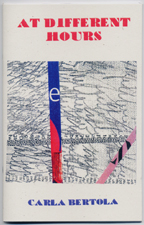
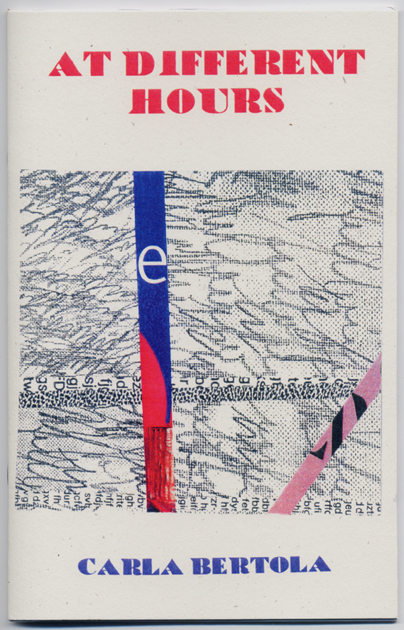
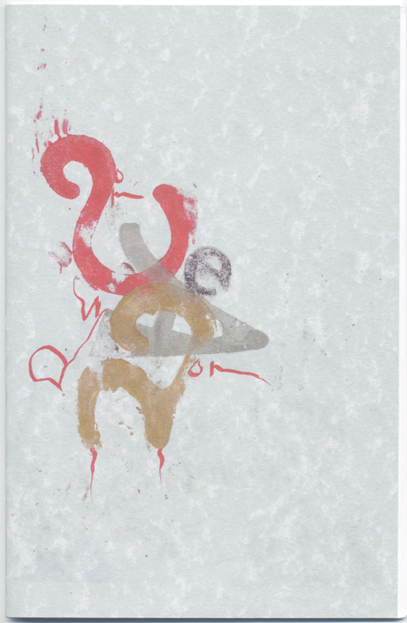
At Different Hours, by Carla Bertola. (Luna Bisonte Prods, 2007) The verse-based works of Italian-born poet Bertola could be found in small magazines throughout the 1960s and ’70s, her style moving to visual collage and pen-and-ink works in the ’80s. At Different Hours prints a collection of the latter sort of poems, which are reminiscent of calligraphy exercises, children’s activity books, Xerox experiments, and typewriter tricks predicting the later ASCII art movement. As such, this collection could provide inspiration to writers and visual artists alike. Dig inkjet/xer saddle-stitched 44pp. No price listed. Source: Publisher. Contact: John M. Bennett, Luna Bisonte Prods, 137 Leland Ave., Columbus, Ohio 43214.
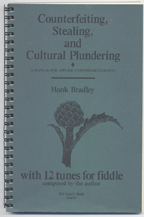
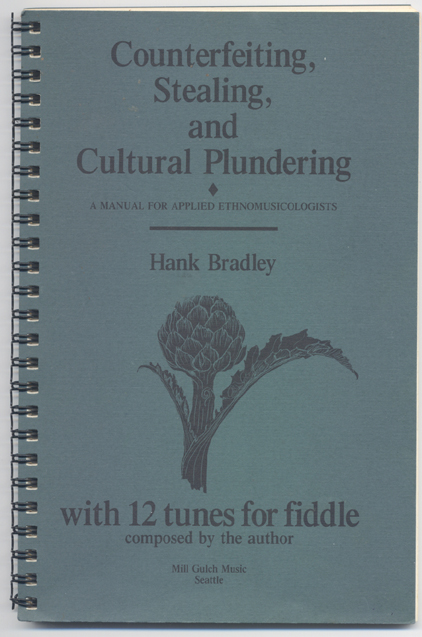
Counterfeiting, Stealing, and Cultural Plundering (A Manual for Applied Ethnomusicologists), by Hank Bradley (Mill Gulch Music, 1989) Written in a lively and witty style, Counterfeiting… is full of piercing observations about the conflicted motives of academics, folklorists, and the extant members of otherwise vanished tribes who resuscitate their ancestors’ evaporated musical styles. Bradley sets the tone early on, stating that “for a folk music to flourish and continue it must be a functional part of the lives of youngsters still coping with their gonads, so that in their elderly days the music summons memories far more urgent than the name of a bowing pattern. Neither should their grandchildren require the encouragement of grant eligibility to learn that bowing pattern.” The tract is divided into individual articles on “cultural plundering” (the impossible conceit that someone from outside the village—whether in darkest Africa or the wrong side of the tracks in Kentucky—can capture in a handful of tunes a culture that has taken centuries of custom, climate, and cultivation to create), “stealing” (the art of playing by ear, recapturing the vitality stripped away by recordings and other modern conveniences, and teaching without sheet music), and “counterfeiting” (a range of talents including improvisation, parody, and the creation of entirely new contributions to the musician’s beloved idiom, including notes on how and when to fool “the Authorities”). The booklet closes with a dozen of Bradley’s own musical inventions, several written with the idea that the player can decide where to begin or end the tune, “since the composer is seemingly reluctant to stop and writes them to chase their own tail.” A joy to read, thanks to Bradley’s obvious love of music as well as the strivings toward authenticity of his fellow ethnomusicologists. Digest off spiral 48pp. $8.00 used. Source: Bookbuyers, 600 Lighthouse Avenue, Monterey, Calif. 93940. Contact: Hank Bradley, 8033 14th Ave. NE, Seattle, Wash. 98115.
Orbis Nex: In Memoriam, by Patricia Cram. (2009) Some people know how to throw a house party. Others forgo this in exchange for creating a world unto itself. During their nearly five-years’ residency at Orbis Nex, a warehouse loft in Oakland, California, Patricia Cram and Company perfected the latter approach. Within their bona-fide industrial home, these artists combined concrete, steel, leather, gauze, candlelight, amplification, and a revolving cast of bootleggers, dancers, musicians, magicians, and shape-shifters to burn down all notions of what a social gathering could be and raise something stupendous and magical from the ashes. Aside from the parties, Orbis Nex also hosted meetings, classes, and the “Blood & Ink” series of writing nights. Cram, who publishes the deliciously dark magazine Vial, was a genius at providing each gathering with an evocative theme and title, e.g. “Venusian Bacchanalia,” “Okultura,” and the monthly “Katanexus.” I had the honor of attending a handful of such evenings at Orbis Nex, and found them to be the absolute coziest time one could have while wearing too much eyeliner. So when I received a cryptic message of Orbis Nex’s impending closing (something to do with tenant-landlord relations) a few months ago, I knew that it was the end of an era. Obviously, Cram felt this way too, memorializing the space’s demise with a final party, titled “Obsequium Funeris,” and the publication of a 57-copy run of hardcover books — copper ink on black pages — commemorating the parties, potions, and people that made it all possible. The opening pages (labeled “Rites”) list selected gatherings, followed by chapters on “Elixirs” (an invaluable grimoire of intoxicants from the bar) and “Elements” (a playlist of favorite albums and songs from the evenings). Interspersed are eight pages of color photographs of performances and event flyer reproductions. Patricia includes a short essay reflecting on her time at Orbis Nex, then ends the book with a roll-call of the people and organizations instrumental to the space’s success. Along with my copy of …In Memoriam, I picked up one of Cram’s homemade wormwood tinctures, so that even as the embers of Orbis Nex fade, I can still put a little fire in my belly until the next manifestation, elsewhere, of this dark jewel of a world. Digest off case-bound book, 20pp. $30. Source: Publisher. Contact: Patricia Cram, P.O. Box 225124, San Francisco, Calif. 94122. Inquire regarding availability before ordering at omen@disinfo.net.
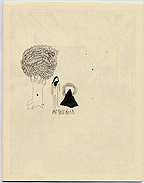
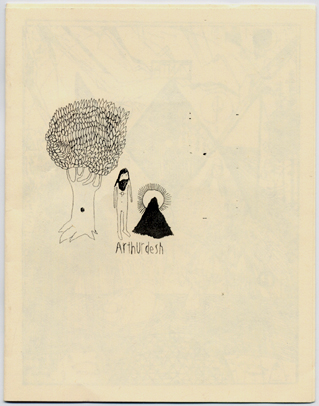
The Poppy Seed Programme, by Nance Klehm and Michael Hilde. (2009) I discovered the existence of this slight and sweet pamphlet through the Arthur Magazine website. Arthur could be characterized as a stateside publication echoing the pastoral and pleasingly esoteric vibration last heard from the Ptolemaic Terrascope, itself reminiscent of 1960s-era publications such as ZigZag. Arthur goes further afield, literally, reporting on homesteading and self-sufficiency as often as it talks about music. The Poppy Seed Programme is a keepsake from the First Poppy Seed See-in, a gathering for people interested in learning about sowing the acre’s worth of poppy seeds contained within the pamphlet. Between opening pages of Hilde’s pen-and-ink illustration and a closing page advertising Arthurdesh, a benefit concert and reading for the ailing Arthur (which ceased physical publication recently and now conveys all its messages online), the center spread is given over to seed collector Klehm’s philosophical history of the poppy and the aforementioned packet of bona-fide seeds, with instructions on planting and growing the legend-laden flowers. The entire pamphlet is hand-drawn and lettered by Hilde in a style strongly recalling Alicia Bay Laurel’s Living on the Earth, with drawings of hairy nudes staring off into the middle distance, lush trees, pyramids, and giant flowers standing haplessly nearby. And like Living..., the Programme encourages a reconnection with the natural world through a simple act (scratching the surface of the earth, dropping a few seeds here, a few there), with Mother Nature taking care of the rest. I found myself wishing that Klehm and Hilde’s values had extended beyond the nice sentiment and fine artwork to the production of the booklet itself, perhaps using natural fiber paper, a larger format, and (at least in the instance of my copy) staples that hit the fold. There is so much talent and love among the artists and musicians involved with these various projects that despite this nice manifestation, I know they can do better. Half-digest xer saddle-stitched pamphlet, 8pp. with tipped-in baggie of poppy seeds. $6 (distributed free at the See-in). Source: Jay Babcock. Contact: Arthur Magazine, Attn: Jay Babcock, 2037 Frankford Avenue, Philadelphia, Penn. 19125, or editor@arthurmag.com. Also available: An Arthurdesh promotional poster by Arik Roper: A3 silkscreen broadside. $5.

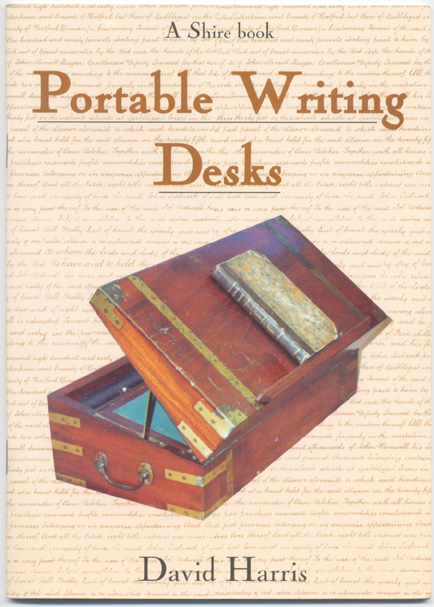
Portable Writing Desks, by David Harris. (Shire Publications, 2001) Harris gives a well-researched history of these idiosyncratic objects of epistolary paraphernalia. Portable writing desks were first used by the clergy in the 16th century, the desks’ popularity growing among the rich and fashionable as the centuries passed. Many were custom built for their owners, and collectors today rarely find identical specimens. Color photographs of the desks decorate every page of the pamphlet, and reprints of maker’s labels and advertisements are printed throughout. Shire Publications offers a free catalog of their pamphlets, just ask. A5 off saddle-stitched, 40pp. £4.50. Source: Living History Farms, Urbandale, Iowa. Contact: Shire Publications, Cromwell House, Church Street, Princes Risborough, Buckinghamshire HP27 9AA, England.
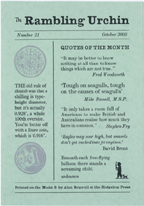
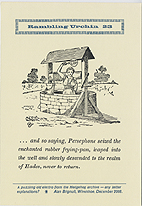
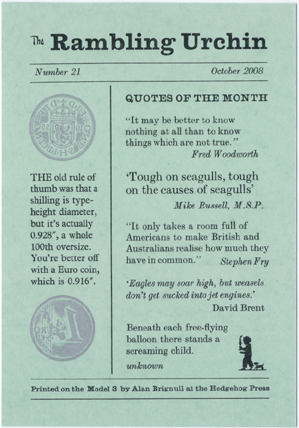
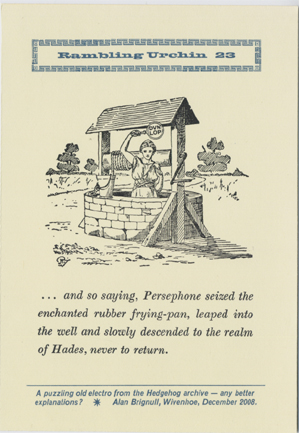
The Rambling Urchin ns.21 and 23, by Alan Brignull. (The Hedgehog Press, 2008) Suspected Anarcrisp sympathizer Brignull prints this series of pithy postcards safe within the confines of his self-made Perfect State of Flatby. In aesthetics and content, The Rambling Urchin echoes The Cunningham Amendment with sometimes goofy, sometime poignant reflections on modern life. Issue 21 is given over to a size comparison of the shilling to the Euro (with the coins themselves pressed into service as type) and some witty quotes, including the unattributed “Beneath each free-flying balloon there stands a screaming child.” A6 letterpress broadside. No price listed. Source: Peter Good. Contact: The Hedgehog Press, 33 Heath Road, Wivenhoe, Colchester, Essex C07 9PU, England.




Walks in the Rhubarb Triangle, by Richard Bell, with recipes by Barbara Bell. (Willow Island Editions, 2009) Bell continues his contributions to the quintessentially British pastime of countryside rambling in this delightful new booklet. Inspired by some sketches he made following an unexpected car breakdown in “The Rhubarb Triangle” between Wakefield, Leeds, and Bradford, he collects herein nine circular walks that afford ramblers glimpses into the political, spiritual, botanical, and etymological past of the area. Educational comic strips detail the lives of some of the Rhubarb Triangle’s more colorful characters, as well as the history of the tasty crop from which the region takes its name. Throughout the pamphlet, Bell imparts several tidbits of advice for walkers about how to minimize environmental impact to the routes. Walks marks Bell’s first strides into the realm of full-color production, and the move has allowed him to intersperse helpful color photographs and sketches, which can now convey more subtleties of the local flora and stone. The inclusion of color also allows for more useful detail in the maps, always my favorite parts of a Willow Island booklet. A close second to the maps this time around is the selection of Richard’s wife Barbara’s mouthwatering recipes, which had me stealing longing glances at my own rhubarb bush from my reading perch on the bench in the Bonita Hollow veggie patch. (Notes from Richard, from a letter he sent with the pamphlet: “I think I told you that I was working on Walks. It took me longer than I expected and even after nine months it still took a couple of late night sessions to get it off to the printers in time for last week’s Rhubarb Festival where we sold 180 copies at various events—a huge number for one of my local books. I’m only sorry that I can’t enclose a sample of Barbara’s rhubarb cheesecake which proved popular at the book launch at Rickaro Bookshop in Horbury on Saturday. I like the colourful Rhubarb format so much that I’m adapting it for a Sherlock Holmes project that I attempted—but didn’t finish—in black & white some years ago. Wonder if I can get it in print in time for Conan Doyle’s 150th anniversary in May?!”) 8vo off saddle-stitched pamphlet, 32pp. £2.99. Source: Publisher. Contact: Richard Bell, Willow Island Editions, 41 Water Lane, Middlestown, Wakefield, West Yorkshire, WF4 4PX, England.
From The Pamphleteer of Wednesday, 19 November 2008
Pamphleteer and artist John M. Bennett was largely unknown to me until recently, the only samples of his work I’d seen filtered to me through the mail by the prolific performance and assemblage artist Scott MacLeod. With the launch of The Pamphleteer, however, MacLeod and Bennett himself have taken to sending me packets of his works, which he publishes under the banner of Luna Bisonte Prods. Bennett is a lover of the abstract, happenstance, and cheerful collaboration between artists (often via post). Here is a round-up of most of the Luna Bisonte publications I’ve received this year, grouped by style for those who may be drawn to these eclectic works, which reward repeated reads. To order yours, contact John M. Bennett, Luna Bisonte Prods, 137 Leland Avenue, Columbus, Ohio 43214.

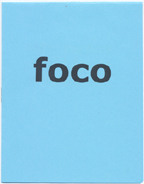

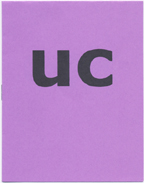
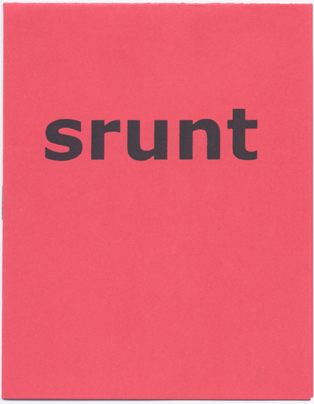
binga / foco / OFF / uc, by J.M.B. (2007–2008) It took a bit of sorting for me to make any semblance of order of the largest package of pamphlets I received from Bennett, but once I did, I got a better sense of what his work is about. Bennett is a poet, collage artist, and inveterate collaborator (see review of The Chapters in the 24 Nov 2007 issue of The Pamphleteer). With binga, et al, he performs some Dadaist poetry. Each uncut page in these tiny zines contains a word or phrase, seemingly nonsensical, perhaps in code. For example, the entire text of binga consists of “binga,” “trodna,” “flamder,” craempt,” “chadowk gloonk,” “andat,” “slallow,” and “glaw.” Each pamphlet is a bit different in the types of words selected, and as a group this set of four (five with srunt, reviewed below) offers much more than the sum of its parts. Half-dig xer saddle-stitched, 8pp. uncut. No price listed. Source: Publisher.
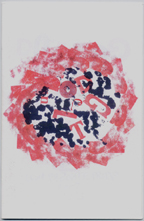
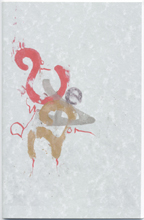
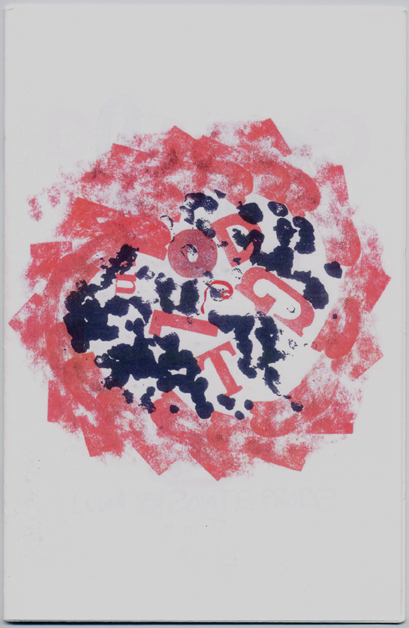
Dot Dog / @chab, by J.M.B. and Andrew Topel. (2007–2008) Bennett and Topel present beautiful and strange assemblages of text (typed, rubber-stamped, and calligraphed), line, and spray paint. Dot Dog is consistent throughout, with page after page of what might be portraits (of people? of dogs?). @chab includes some typed cut-and-paste constructions arranged to hint at three-dimensional geometry, as well as some gibberish poetry that might appeal to fans of Captain Beefheart. Dig color xer / screenprinted saddle-stitched 12/24pp. No prices listed. Source: Publisher.
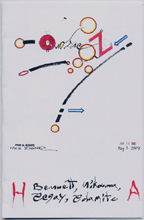
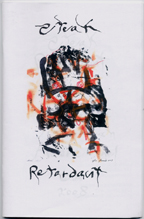
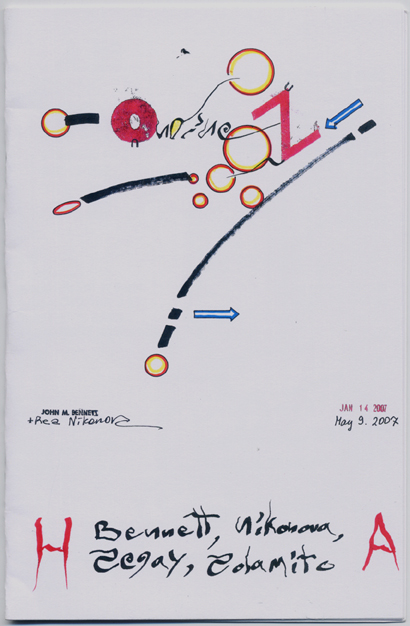
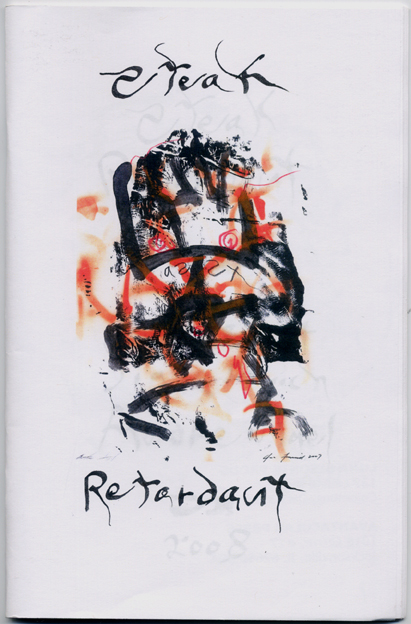
Ha / A Teak Retardant, by J.M.B., et al. (Luna Bisonte Prods/Avantacular Press, 2007–2008) Bennett collaborates with Rea Nikonova, Serge Segay, and Solamito Luigino in Ha, a brief and bold collection of collages made of paint, rubber stamp, typography, and calligraphy. A Teak Retardant brings together Bennett, Jim Leftwich, and Andrew Topel for similar experiments. The color printing of Ha lends an air of life to the proceedings, while Teak’s stark black-and-white Xerox production gives it a more menacing tone. Dig color and b&w xer saddle-stitched, 8/44pp. No prices listed. Source: Publisher. A Teak Retardant is co-published with Avantacular Press, 1018 Grove, No.17, Jacksonville, Ill. 62650.

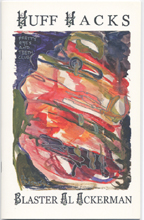
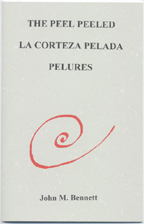
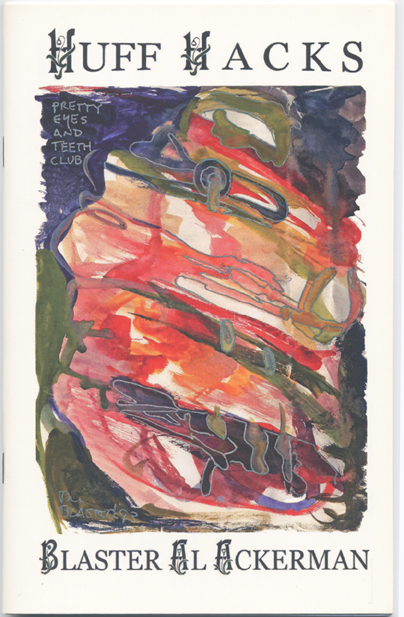
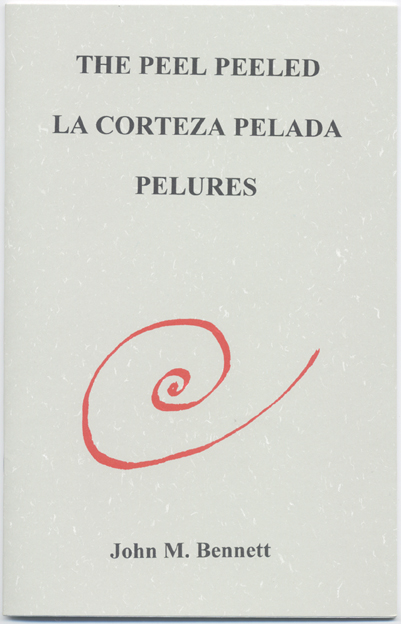
Historietas Alfabéticas / Huff Hacks / The Peel Peeled, by J.M.B., et al. (2003–2007) Historietas Alfabéticas is an abecedarian procession of tiny poems that give a literary effect akin to listening to someone speak as you clap your hands quickly over your ears. Each verse is accompanied by a large rubber-stamped letter smeared aside it as if the letter were falling off the edge of a cliff. Huff Hacks is a compilation of Blaster Al Ackerman’s “hacks,” or edits, of poems from Bennett’s 2006 book Cantar del Huff. Without access to the original work, I can’t say what’s been preserved and what’s been changed, although the poetry seems Bennett-esque even after whatever work has been done on it. Ackerman’s play with words continues into the bibliographical information at the conclusion of each poem, rendering speculation the only avenue for the reader. The Peel Peeled presents a Bennett-penned stream-of-consciousness poem full of half-images. Bennett provides a parallel translation of the poem into Spanish, Carlos Henderson offering in a third column the French. Dig color and b&w xer 16/50/24pp. No prices listed. Source: Publisher.

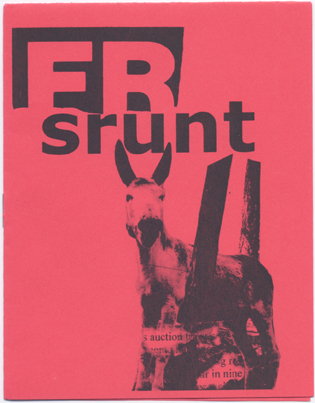
srunt / FRsrunt, by J.M.B./Scott MacLeod. (Luna Bisonte Prods/Scott MacLeod 2007–2008) Subtitled “Sotto Globbolalia,” srunt follows the format of binga, et al (see review above), and as such could be experienced alongside those pamphlets. MacLeod’s hack on the original complicates matters with photographs of animals and clipped poetry, some of it gleefully nonsensical even before it was cut up. Half-dig xer saddle-stitched, 8pp. uncut. No price listed. Source: Publisher. FRsrunt available from Scott MacLeod, 884 Aileen Street, Oakland, Calif. 94608. (MacLeod also included an untitled 2008 hack on an 8-page Bennett digest pamphlet printed on purple paper and composed of Burroughs-style fishbowl poetry, frenetic calligraphy, and delicate clip art. Somehow I ended up with an extra copy of this, as well as an extra FRsrunt, so if anyone is interested, please write and I’ll send the extras to you.)
Here are my thoughts on the works of two publishers dedicated to preserving very different sorts of vintage material—classic illustration and classic rock.
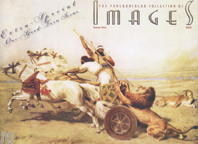
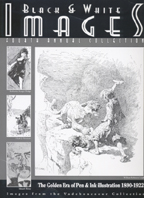
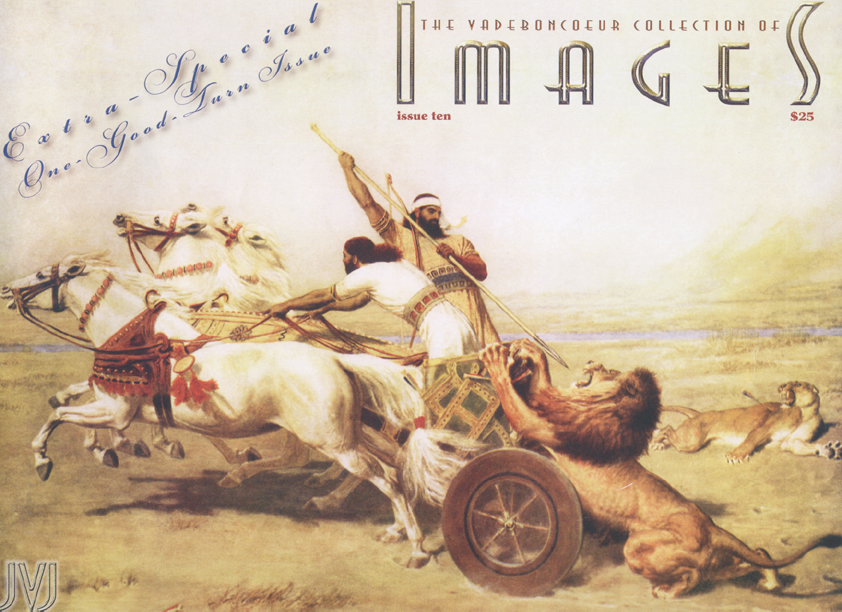
The Vadeboncoeur Collection of Images n.10 / Black & White Images n.4, edited by Jim Vadeboncoeur, Jr. (JVJ Publishing, 2008) Anyone who has ever bought a classic book not to read but just to pore over lavish illustrations should order as many back issues of Jim Vadeboncoeur’s publications as they can afford. Each edition of The Vadeboncoeur Collection of Images brilliantly reproduces paintings from illustrators such as Arthur Rackham, John Bauer, Howard Pyle, and Edmund Dulac, all with stunning color and detail, which is preserved even when Vadeboncoeur increases the size of the original print. Up until this issue, Images has been printed as a tall 4to, but this time around the magazine is produced in “landscape” format to showcase paintings better served by a wide presentation. The introduction and back pages of each issue include notes regarding the technical, personal, and business aspects of the project, all of which can be relevant and informative for other human-scale publishers. The final page also features a catalog and some words championing the publishing efforts of Vadeboncoeur’s peers, including Sunday Press (the publishers of that incredible oversize Little Nemo in Slumberland volume from a few years back) and Bud Plant.
Black & White is the line-art and grayscale companion to Images. As usual, this issue devotes a number of pages to the work of more than two dozen illustrators from the turn of the century, each artist distinct from the next but all displaying life and emotion in their drawings. The pictures are coupled with their original captions and remarks from Vadeboncoeur about their provenance. With this issue, Black & White reprints the first several pages of Herbert Railton’s The Haunted House, which features not only Railton’s illustrations but his own calligraphy and illumination. Vadeboncoeur discusses his own image restoration technique in the opening essay, touching on how he strives to bring out the most of what he assumes was the artist’s original intention. It’s so easy for me to get lost in these exquisite publications. The Vadeboncoeur Collection of Images n.10: 4to off saddle-stitched, 40pp. $25. Subscriptions: 2/$45, 4/$85. Lifetime subscriptions available. Black & White Images n.4: 4to off perfect, 106pp. $25. Source: Publisher. Contact: JVJ Publishing, 3809 Laguna Ave., Palo Alto, Calif. 94306.

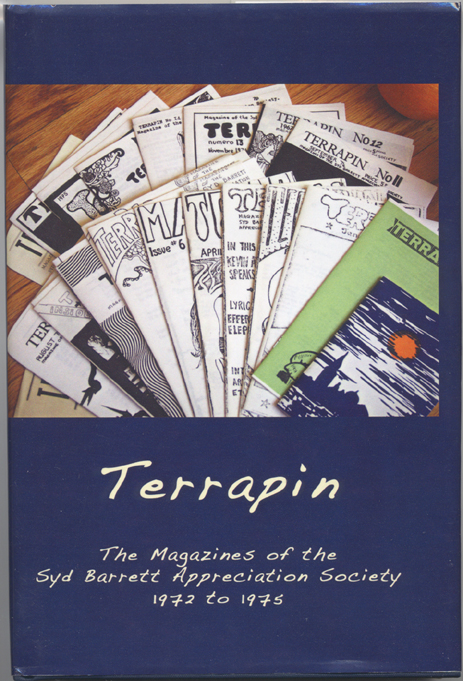
Terrapin (The Magazines of the Syd Barrett Appreciation Society), compiled by Rick Salsman. (2006) Before the advent of the internet, it was more common for psychedelic rock & roll fans to achieve the exquisite joy of stumbling across a rare artifact from or about a favorite band or artist. If you know what I’m talking about, and if your particular jones is for original Pink Floyd vocalist Syd Barrett, then you’re in unparalleled company with Rick Salsman. Barrett passed away in 2006, and as a tribute to his hero, Salsman gathered up his collection of the incredibly rare Syd fanzine Terrapin (first published by John Steele, Lawrence Himelfield, Nigel John, Bernard White, et al, 1972–1975) and brought them back into print in a single volume. In doing so, Salsman defeated the space-time continuum and gave fans a way to take part in a piece of rock history they might have missed otherwise. A fanzine in every sense of the word, the individual issues of Terrapin included photos, poems, news clippings, speculations, interviews, lyric reprints, groovy illustrations, and news items even though there was precious little to report. (Barrett recorded nothing after 1970.) The editors maintain a correspondence with Soft Machine bassist Kevin Ayers about his work with Barrett. Aside from its value as a resource for hard-to-find information and interviews, the collection offers readers today a peek at the reality of pre–internet fandom that foreshadows the coming of blogs and message boards, complete with flame wars. Salsman sells the hardcover anthology exclusively online using the print-on-demand services of Lulu.com. My standards haven’t been particularly high for print-on-demand services, but I was chuffed to see that Lulu did as well as they did with Terrapin. The largest shortcomings in the book’s production are the low resolution of the scans Salsman submitted, the lack of print on the front cover itself (although there is some on the spine, and the dustjacket is nice), and some unfortunate accidental printing on the end pages. That said, Lulu has done the best I’ve ever seen from a print-on-demand company, so I may reprint a collection of some of my own zines through them. 8vo off casebound, 272pp. $22.96. Also available in library ($21.96) and perfect ($12.48) editions, as well as a PDF download ($2.50). Salsman is not the copyright holder of this out-of-print material and as such has set the retail price at the exact price of production. Source: Publisher. Contact: Lulu.com.
From The Pamphleteer of Sunday, 16 March 2008
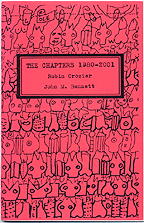
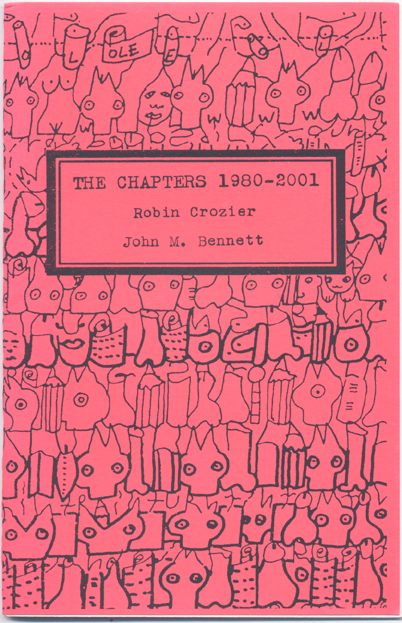
The Chapters 1980–2001, by Robin Crozier and John M. Bennett. (Luna Bisonte Prods, 2002) For 21 years, mail artists Crozier and Bennett collaborated on a series of poems, each person adding one line to the page before sending the poem back. When the page was full, the “chapter” was finished. This booklet collects the 25 chapters of the project, which was deemed complete upon the death of Crozier in December 2001. The stream-of-consciousness results get more interesting around chapter 10, when the typeset poems give way to exquisite corpse–style handwriting and, eventually, rows of hieroglyphs, mirrored letterings of the previous line, and doodles. Digest xer saddle-stitched pamphlet, 28pp. No price listed. Source: Scott MacLeod. Contact: Luna Bisonte Prods, 137 Leland Ave., Columbus, Ohio 43214.
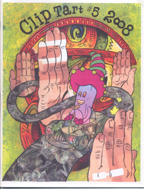
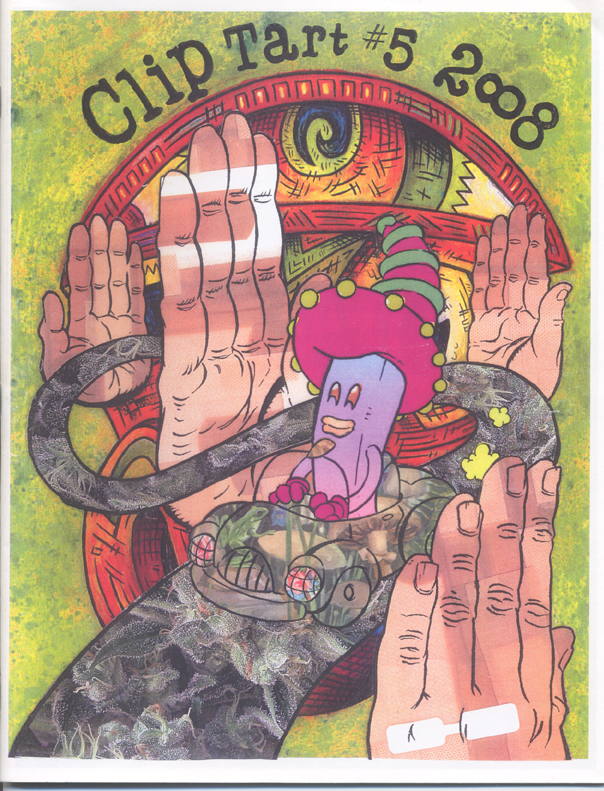
Clip Tart n.5, by Susan Boren. This annual publication collects clippings, collages, and quotes from a variety of sources, the results leaning toward media dissection and explorations of the occult, fantasy art, and old-school Dungeons & Dragons. Each page is a wild work of art unto itself, although a string of quotes from Dr. Seuss, Philip K. Dick, Hawthorne, Camus, and Black Elk, among many others, runs through the magazine and gives an appropriately jittery sense of continuity. This issue includes a helpful U.S. postage rates chart, something that could well become a tradition for Clip Tart, as it sounds like rates will be going up each year. Letter color & b&w xer saddle-stitched pamphlet, 44pp. No price listed, but open to trades. Source: Publisher. Contact: Susan Boren, P.O. Box 66512, Austin, Texas 78766.
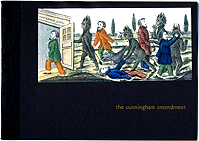
The Cunningham Amendment v.10, n.1, by Doreen Frampton, et al. (R Supward Press, 2008) This occasional bulletin from West Yorkshire serves to remind readers of their own inherent freedoms from corporations, governments, and ideologies (the lot of them being dubbed the “non-fool world”), and of the responsibility toward each other and the earth that comes with such liberty. Those living such a life are identified by The Cunningham Amendment as “anarcrisps,” defined simply as “nice anarchists.” All of this is served straight from the tap in a gorgeously produced letterpress package of bite-sized aphorisms, charming vignettes, and visual and typographical puns. These same articles offer regular glimpses of the violence and crushing repression inherent to organizations, just to keep readers on their toes. Highly recommended and a great influence on what happens here at Wonderella. A5 color letterpress with tip-ins, 26pp. Send cash, stamps, or equivalent for your copy. 42p for anarcrisps, £1 for regular anarchists, £2 at book fairs. Open to trades. Source: Publisher. Contact: The TCA, 1005 Huddersfield Road, Bradford BD12 8LP, West Yorkshire, England.

The Duplex Planet n.180, by David B. Greenberger. (Duplex Planet, 2007) Greenberger has been collecting and printing brief interviews with elderly nursing home residents since 1979. Each issue has a theme that anyone could have an opinion on, such as coffee (n.104), trouble (n.178), or outer space (n.91). This time, Greenberger asks East L.A. residents about music and, in the last few pages, about their experiences living in California. Interspersed throughout are photographs of some of the subjects and what looks to be garage bands of the ’60s and ’70s rehearsing and performing. Digest xer saddle-stitched pamphlet, 16pp. $12 for six issues (USA) or five issues (Canada), back issues available. Source: Publisher. Contact: Duplex Planet, P.O. Box 1230, Saratoga Springs, New York 12866, online at http://www.duplexplanet.com.
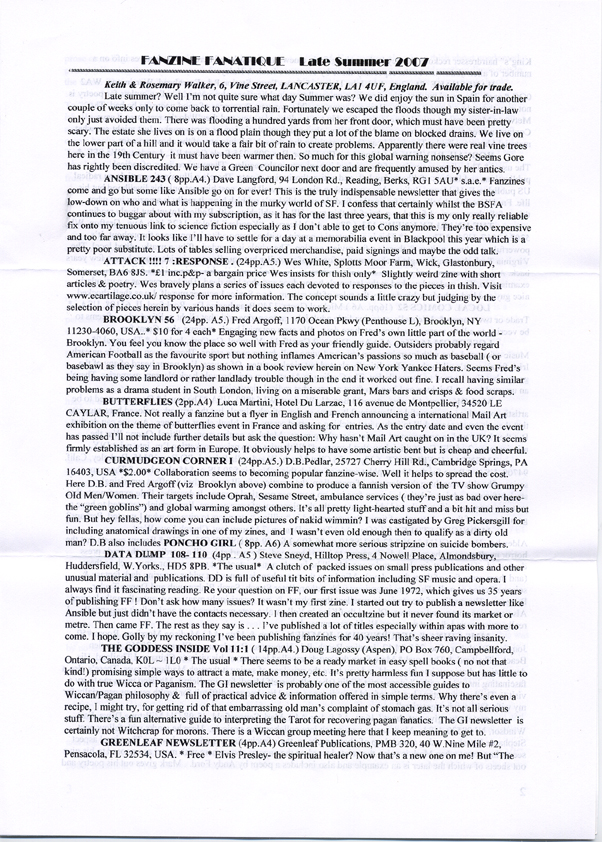
Fanzine Fanatique, by Keith and Rosemary Walker (2007) This chatty newsletter gives concise reviews of nearly three dozen publications, with an emphasis on those pertaining to sci-fi fandom, mail art, poetry, and spirituality. Readers get to know Keith and Rosemary via the asides sprinkled throughout the reviews. A4 inkjet loose, 4pp. No price listed, open to trades. Source: Publisher. Contact: Fanzine Fanatique, 6, Vine Street, Lancaster, LA1 4UF, England.

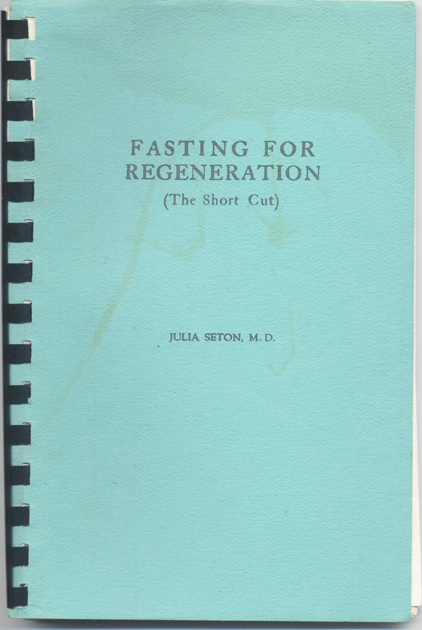
Fasting for Regeneration (The Short Cut), by Julia Seton, M.D. (Health Research, c. 1920) This curious 1988 reprint delves into the practice of transforming the self, alchemically, through the practice of fasting. Health, wealth, love, and usefulness are the promised outcomes once control is gained over one’s body, thoughts, emotions, and higher self. It’s a wonderful mix of science and spirituality from one of the golden eras of esoteric pamphleteering. My tea-stained copy bears binder clip marks and dog-eared pages, so I must assume that someone out there has tried this. Digest xer and spiral-bound book facsimile, 84pp. + 20pp. of advertisements for other publications. No price listed. Source: Scott MacLeod. Contact: Health Research Books, P.O. Box 850, Pomeroy, Wash. 99347. Hundreds of occult titles are listed online at healthresearchbooks.com.
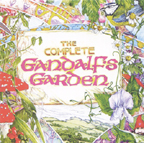
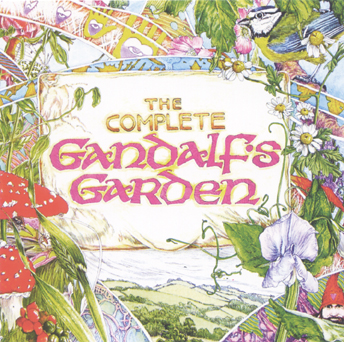
The Complete Gandalf’s Garden, by Muz Murray, et al. (2007) Published in the basement of the King’s Road shop of the same name, Gandalf’s Garden chronicled the flower-power scene of late ’60s London. The “mystical scene magazine” concentrated on the spiritual aspect of hippie life, and served to connect people in London and around the world who were looking for an alternative to the dreary and destructive realities of industrialization, war, or even the darker aspects of the “turned-on” life. Murray & Company produced six issues of the Garden, all of which are highly sought after by collectors. This CD-ROM includes quality scans of every page from the series, as well as photos from the shop, recollections from the many “gardeners” on staff, and reviews of the magazine from back in the day. I’ve got a few prized copies of the printed magazines, and while nothing can beat holding them in one’s hands, this collection gives me much of the same thrill. CD-ROM. £14.99. Source: Publisher. Contact: Muz Murray (Gandalf’s Garden), 179 Montée du Levant, 30820 Caveirac, France, online at www.mantra-yoga.com.
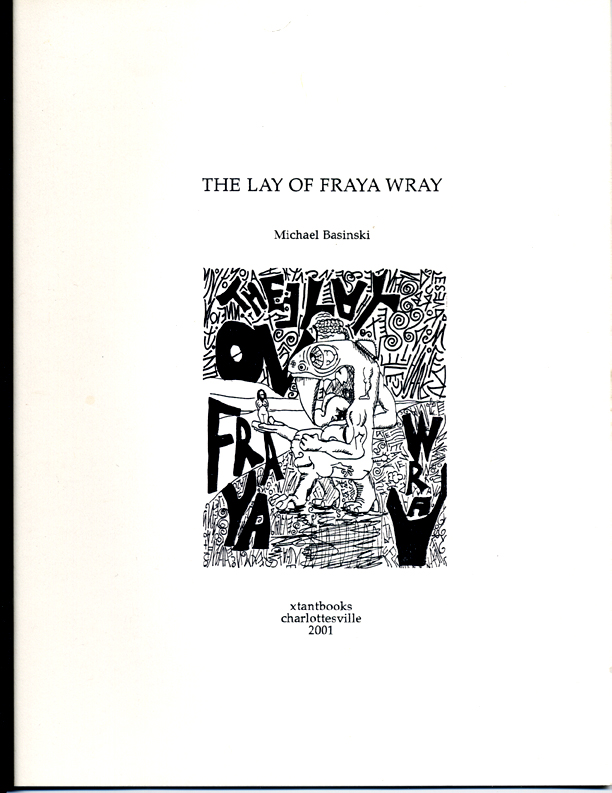
The Lay of Fraya Wray, by Michael Basinski. (Xtant Books, 2001) This collection of poetry claims to be at least as old as the lost 1928 film documenting its creation, even though several of the pieces examine Fay Wray’s work in another film, King Kong, which premiered five years later. Other topics include insects, witches, and Egyptian mythology. Each poem includes notes and commentary for particular lines and for the poem as a whole. The Lay is meant to be read aloud as a performance, although warnings are given against doing so during certain months of the year, or without first appeasing the gods. Letter xer velobound pamphlet, 18pp. No price listed. Source: Scott MacLeod. Contact: Xtant Books, c/o Jim Leftwich, 1512 Mountainside Court, Charlottesville, Va. 22903.
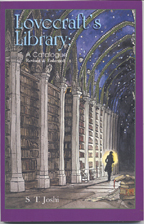
Lovecraft’s Library: A Catalogue (Revised & Enlarged), by S.T. Joshi. (Hippocampus Press, 2002) Late in life, Howard Phillips Lovecraft prepared a list of “Weird &c. Items in Library of H.P. Lovecraft, for the benefit of distant members of the ‘weird fiction gang’ who wish to borrow spectral volumes not obtainable in their home-town bibliothecae.” This volume systematically lists not only these, but nearly 800 other works from his bookcase on topics such as fiction, poetry, history. Although Joshi claims the bibliography to be far from complete, this book still serves as a gateway into the mind of one of the world’s most unique and influential storytellers. Digest off perfect, 176pp. $15. Source: Angelo Sphere and Melissa Miller. Contact: Hippocampus Press, P.O. Box 641, New York, New York 10156.

Normal Antlers, by Geezer. (2001) This rumination on the sporting life combines a series of photographs and line drawings about hunting and fishing with captions of varying relevance. A small piece of paper illustrating how to make a backpack out of a pair of pants or a flour sack was sewn, with red thread, into the center spread of my copy. The booklet reminded me of Crispin Glover’s incongruous photos and captions in What It Is, and How It Is Done, only with less continuity. Digest xer saddle-stitched pamphlet, 8pp. No price listed. Source: Scott MacLeod. No contact information listed.
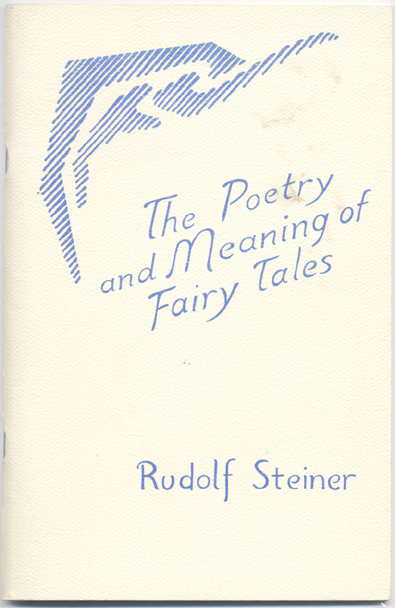
The Poetry and Meaning of Fairy Tales, by Rudolf Steiner. (Mercury Press, 1989) Of the 6,000 lectures Austrian esotericist Rudolf Steiner delivered during his lifetime—on topics as diverse as education, agriculture, medicine, and religion—two were about the nature of fairy tales. Translated and transcribed in this booklet, the talks outline Steiner’s sense of the prehistoric origin of the stories, some insights into their archetypal meaning, and how children respond to the tales when told by adults with this same understanding. Recommended to readers interested in an iconoclastic look at these timeless stories, as well as people attracted to Rosicrucian thought, earth religions, and symbolism. A5 off saddle-stitched pamphlet, 54pp. $4.50 used. Source: St. George Book Service, Inc., P.O. Box 225, Spring Valley, New York 10977. Contact: Mercury Press, Fellowship Community, 241 Hungry Hollow Road, Chestnut Ridge, New York 10977.
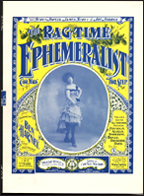
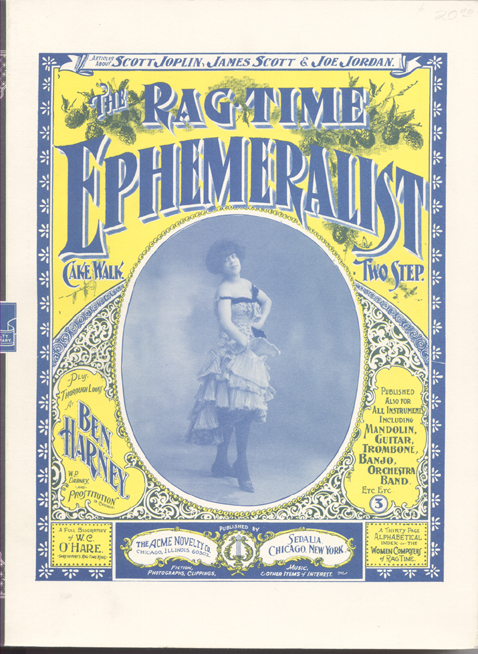
The Rag-time Ephemeralist n.3, by Chris Ware, editor, et al. (The Acme Novelty & Co., 2002) Refreshingly dispensing with its publisher’s tendency toward crushing nihilism, this volume of engaging scholarly essays, photos, press clippings, and sheet music reproductions approaches the subject of ragtime music with as much obsessive zeal as Chris Ware puts into drawing and lettering the panels of his Acme Novelty Library comic books. Contributors Nan Bostick and Nora Hulse, for instance, include more than 300 entries in their directory of “Ragtime’s Women Composers.” Among the other articles are a history of the trombone in ragtime and a fiction story by Seth Kallen Deitch, with illustrations by his brother Kim. 8vo off perfect, 256pp. $20. Source: Analog Books, 1816 Euclid Ave., Berkeley, Calif. 94709. Contact: The Acme Novelty & Co., P.O. Box 3626, Oak Park, Ill. 60303.
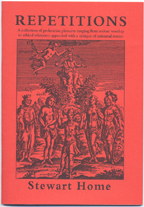
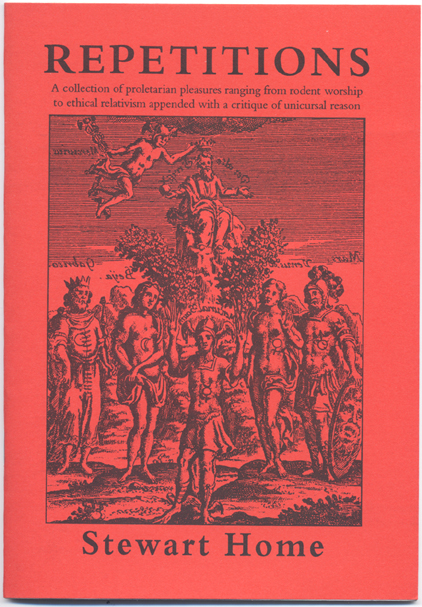
Repetitions (A Collection of Proletarian Pleasures Ranging from Rodent Worship to Ethical Relativism Appended with a Critique of Unicursal Reason), by Stewart Home. (Sabotage Editions, 1999) Artist, writer, filmmaker, and activist Home staples together a mischmasch of articles, correspondences, and rejected book introductions on topics such as media prankdom, sexual experimentation, philosophy, art criticism, and the nature of the writing life. Among the offerings is Home’s account of what happened when he started showing people his take on the NHS donor card—in addition to offering his internal organs post mortem, Home also gives himself freely to any necrophiles who may be transporting him to the morgue. A5 xer saddle-stitched pamphlet, 32pp. £3. Source: Scott MacLeod. Contact: Sabotage Editions, BM Senior, London WC1N 3XX, England.
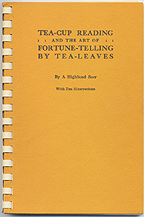
Tea-Cup Reading and the Art of Fortune-Telling by Tea-Leaves, by A Highland Seer. (Health Research, 1968) Another reprint similar in form to Fasting for Regeneration (see entry). This booklet dips into the science and symbolism of tea-leaf reading which, as the author states, offers the practiced oracle a glimpse at what may come to pass in the next 24 hours. Advice is given on the best tea and cups for fortune-telling, and readers learn the mental, physical, and observational processes necessary for a good read. A list of symbols and their meanings—as well as a series of example drawings of tea-leaf configurations—put this pastime within reach of the most serious or playful clairvoyant. Includes an additional chapter on omens. (“Think of a wish first, and then count your fruit stones or pips. If the number is even, the omen is good. If odd, the reverse is the case.”) Digest xer and spiral-bound book facsimile, 94pp. + 8pp. of advertisements for other publications. $4 used. Source: Scott MacLeod. Contact: Health Research Books, P.O. Box 850, Pomeroy, Wash. 99347, online at healthresearchbooks.com.
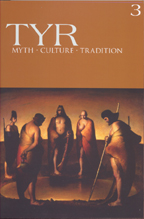
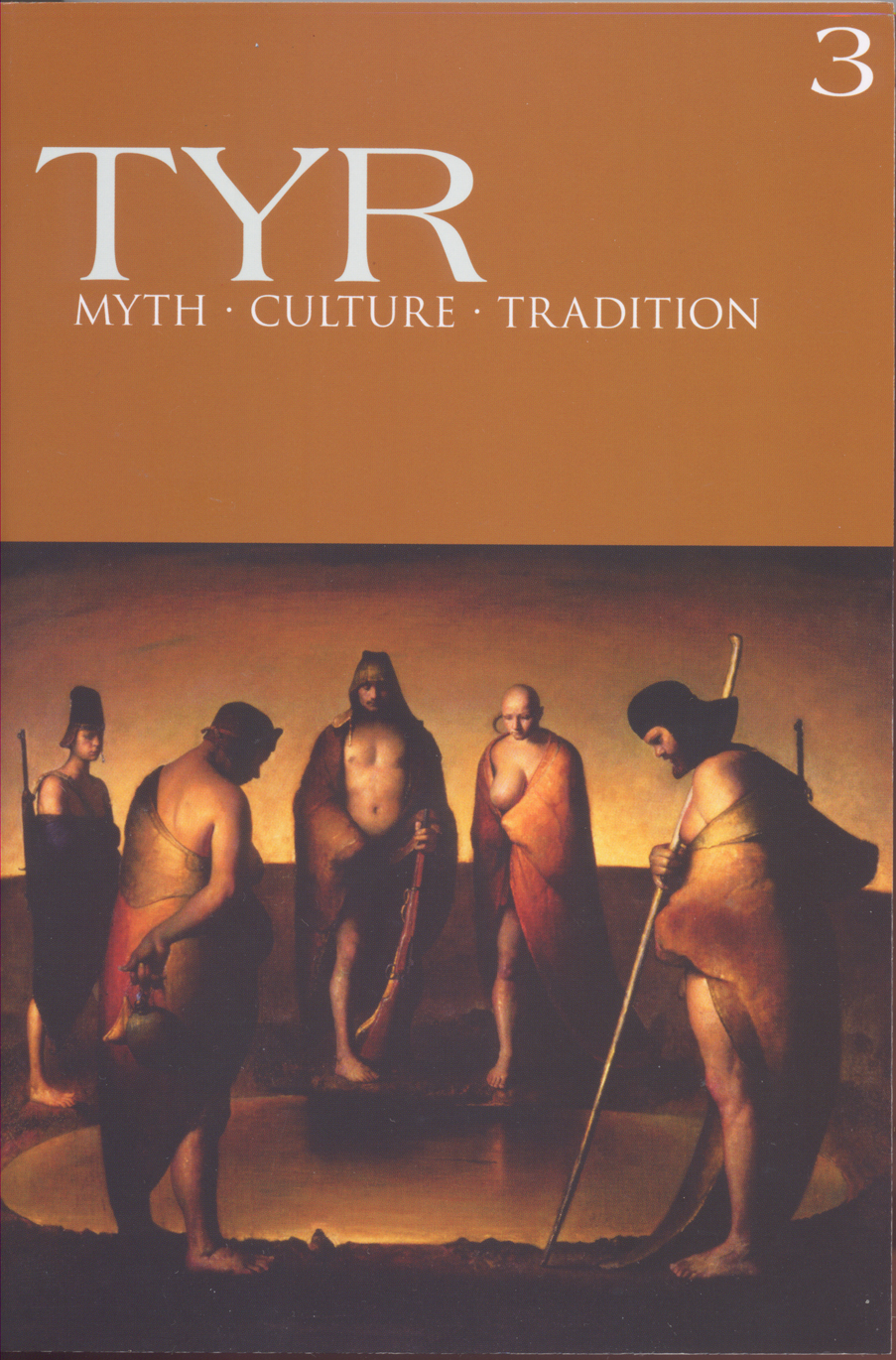
Tyr n.3, by Joshua Buckley and Michael Moynihan (editors), et al. (Ultra, 2008) Following a few years absence, this journal of radical traditionalism and cultural renewal returns with its largest volume to date. Tyr calls for the reversal of the destruction wrought by corporate hegemony, industrialization, materialism, and progress for progress’ sake. Folk traditions and the romantic art movements of Europe are held up as pathways to a solution, and the resulting art and articles are thoughtful and scholarly. Fantasy-loving esotericists will delight at the fact that Tyr prints an exploration of Philip Pullman’s His Dark Materials trilogy by Joscelyn Godwin. Of the articles I’ve read so far, my favorite is Gordon Kennedy’s article on how the West Coast hippie scene owes a greater debt to the sandal-clad German “Nature Boys” found in 1940s California than to the Beatniks. Cover painting by Odd Nerdrum. 8vo off perfect, 536pp. $25. Source: Publisher. Contact: Ultra, P.O. Box 11736, Atlanta, Ga 30355, online at www.radicaltraditionalist.com.
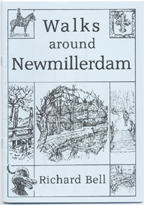
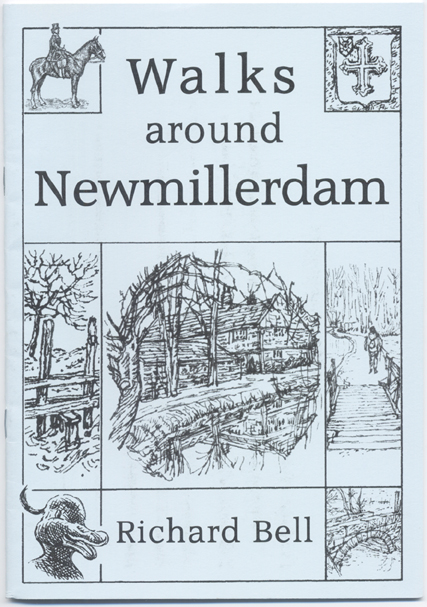
Walks Around Newmillerdam, by Richard Bell. (Willow Island Editions, 2007) Longtime watercolor diarist Bell produced this guide to the paths in Newmillerdam Country Park. Half a dozen circuit walks are described in detail, with absolutely charming hand-drawn black and white maps and small sketches of points of interest along the way, including turns in the path, stiles, flora, and architectural details. Includes some history, access, and OS map information. The booklet has been adapted from the online nature journal Bell keeps and is one of about twenty such guides to West Yorkshire listed at www.willowisland.co.uk. A5 xer saddle-stitched pamphlet, 28pp. £1.95. Source: Publisher. Contact: Willow Island Editions, 41 Water Lane, Middlestown, Wakefield, West Yorkshire, WF4 4PX, England.
From The Pamphleteer of Saturday, 24 November 2007

Ptolemaic Terrascope No.36
For fifteen years, this small but influential magazine charted the world of psychedelic, rustic, or just plain experimental music from its outpost in the most unlikely of locations—the tiny town of Melksham in Wiltshire, England. The Ptolemaic Terrascope was published by Bevis Frond frontman Nick Saloman and edited by writer, music lover, and devoted aural archivist Phil McMullen. Every copy of the “illustrated occasional” sold out immediately thanks to the Terrascope’s chatty and insightful interviews, charming artwork and design (reminiscent of fanzines from the British Invasion years), and the limited edition 45-rpm records (and later compact discs) produced by Saloman and packaged with the magazine.
McMullen expanded the scope of the publication in 1997 with “Terrastock,” a three-day music festival in Rhode Island. Ostensibly a fund-raiser for the magazine, the event only ended up putting it further in the red. Regardless of considerable financial and personal costs, McMullen’s shepherding of the magazine through publication, organizing of the annual festivals, and coordinating of an online discussion board at terrascope.co.uk worked wonders not only for the musicians (in one example, Tom Rapp of Pearls Before Swine came out of retirement to play at Terrastock) but also for the worldwide fanbase for the varied music championed by the magazine. Readers enjoyed a common source for information about obscure and forgotten music, along with the chance to meet either in person at the festivals or virtually online.
For those peering keenly through the Terrascope, then, it came as little surprise when, in winter 2004–2005, McMullen admitted his fatigue and announced his bittersweet desire to sell the publishing rights to the magazine so he could focus on the website and festival. And perhaps no one was more surprised than McMullen when Californian Pat Thomas, a Terrascope contributor, musician, and record producer, stepped forward a few months later to make the purchase.
Speculation among the readership as to what changes Thomas would make to the beloved fanzine gave way after a few years to near-resignation that the Terrascope had finally given up the ghost. Occasional notices from Thomas on the magazine’s website hinted that production on the next issue was underway, though. A few months ago, patience and faith were rewarded with issue No.36, falling from the sky like early autumn leaves.
With a history and ethos as strong as the Terrascope’s, it’s nigh impossible not to look for comparisons and contrasts between the McMullen issues of the magazine and the new publication Thomas has assembled. One look at the cover photo—a version of the sleeve art from Devendra Banhart’s Cripple Crow album, of thirty or so San Francisco groovers hanging out in Buena Vista Park—lets none doubt that the Terrascope Nation stands tall in its new American home. The interior look is somewhat cleaner than before (I must admit favoring the old hand-drawn borders and mix of small type and hand-lettering), and the illustrations, while new, seem lovingly familiar. The magazine’s interview subjects—among them Banhart, Ben Chasny, and Shirley Collins—keep with the classic roster, but the inclusion of an interview with Elaine Brown of the Black Panthers helps the new Terrascope distinguish itself as a product of the West Coast. Perhaps best of all is the inclusion of a twenty-track disc of new “Terrascopic” music. Three cheers to Pat Thomas and Company for their diligent work in keeping the freak flag flying.
To learn about Terrastock and join the Terrascope Online community, visit terrascope.co.uk. Single copies of the magazine are available for $10 per ($16 outside the USA) through:
Ptolemaic Terrascope
c/o (and checks to) Pat Thomas
Post Office Box 18841
Oakland , Calif. 94619
Online at terrascope.org
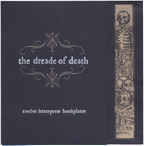
The Dreade of Death
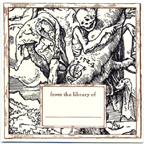
Even though authorship may lend immortality, this set of one dozen macabre bookplates reminds us that death is still right around the corner for book collectors. The plates are based on four woodcuts from a variety of 16th-century sources and are tastefully produced in brown and black on the three-inch-square self-sticking labels.
Bay Area ephemeralists can find the set in Berkeley at Castle in the Air, 1805 Fourth Street. Others can inquire for price and availability via:
Manifesto Letterpress
116 Pleasant Street, No. 201
Easthampton, Mass. 01027
Online at manifestopress.com
More about The Pamphleteer